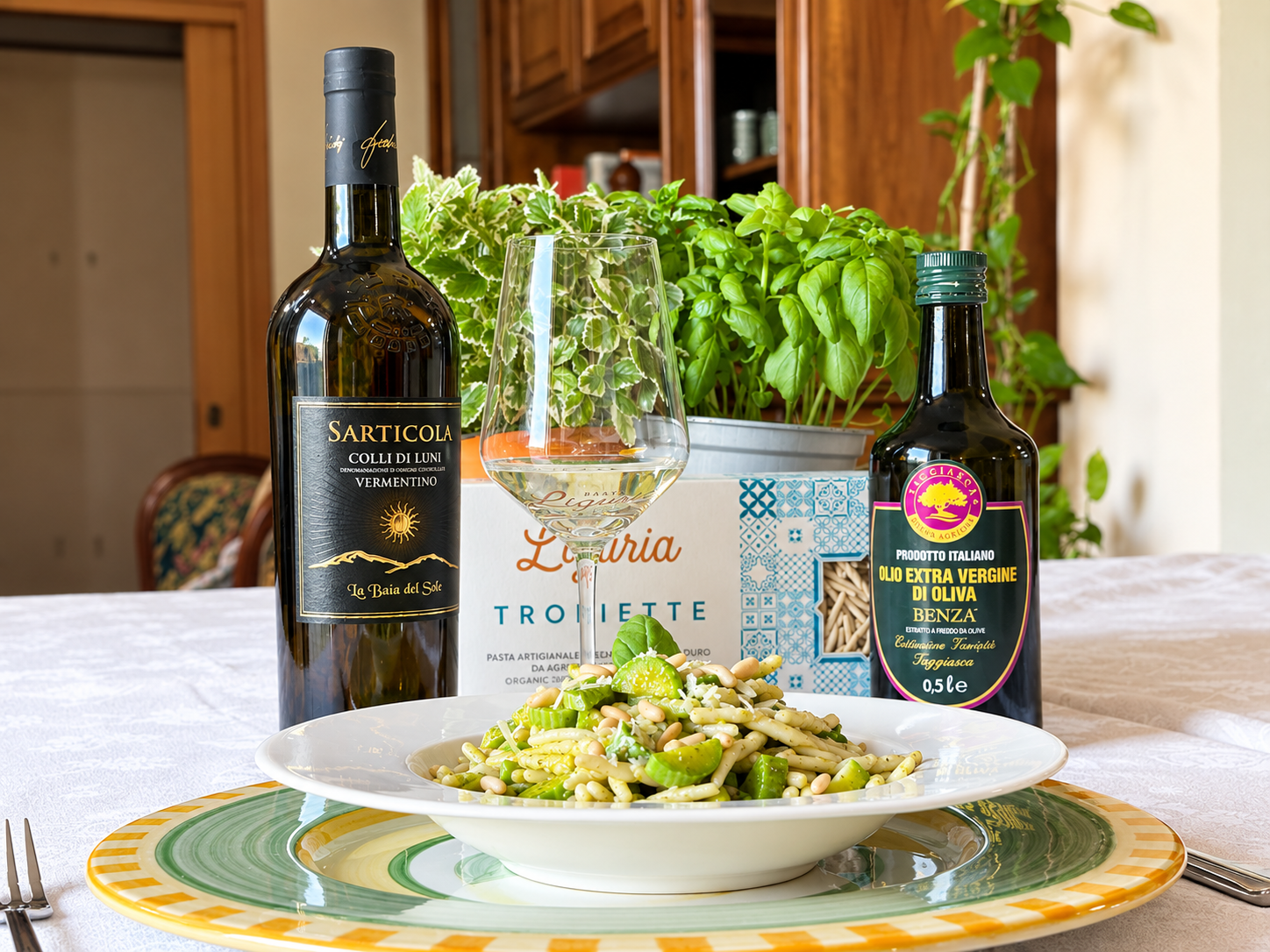
The idea of pounding together aromatic herbs, garlic, cheese, and seasonings is very ancient; even in Roman cuisine, there were preparations similar to moretum.
Pesto was born from the union of the aroma of basil and the ancient art of the mortar.
In western Liguria, this union finds a natural companion in extra virgin olive oil: basil grows blessed by the sea breeze, while the oil comes from the olive trees that adorn the hills and terraces of the inland region. Two distinct landscapes, brought together in a single sauce.
Pesto, in the form we know today, became established in the 19th century.
The first recorded recipe is generally traced back to 1865, when it appeared in the Ratto brothers’ *Cuciniera Genovese*, described as a mixture of minced garlic and basil.
Ingredients for 4 people:
- Two generous handfuls of basil leaves (about 70 grams)
- Two cloves of garlic
- One glass of extra virgin olive oil (80 g) (try our TAGGIASCO)
- 30 grams of pine nuts
- 50 grams of grated Parmesan (or, alternatively, a blend of Parmesan and Pecorino for a bolder flavor)
- A pinch of coarse salt
- 600 grams of trofie pasta
- Two handfuls of trombetta zucchini, sliced into rounds (the most traditional version calls for potatoes and green beans: trombetta zucchini is a delicious and modern variation, but just as typical)
More than just a sauce, it’s a ritual: just a few ingredients, a mortar, and centuries of Ligurian history.
Method using a mortar:
- Trim and wash the basil leaves, then lay them out on a dish towel to dry.
- Crush the garlic in a mortar (stone or marble) with a wooden pestle, using circular motions, until you obtain a smooth paste; add the pine nuts and continue crushing.
- Add the basil leaves to the mixture along with a pinch of coarse salt (the salt keeps the basil a beautiful bright green and helps break down the fibers), and begin pounding by rotating the pestle against the sides of the mortar, using the “ears” of the mortar to hold it steady.
- Once you have a smooth mixture, add the cheese and then slowly drizzle in the olive oil while continuing to pound, until you achieve a smooth cream.
- Optionally, you can use a blender instead of a mortar (though it’s not quite the same), taking care not to over-blend the mixture, as it will become darker and less fragrant.
Preparation:
- Once the pesto is ready, bring a pot of water to a boil, add salt, and add the sliced trombetta zucchini.
- Then add the trofie and continue cooking.
- Drain the trofie along with the zucchini, reserving a ladleful of the cooking water to thicken the sauce and make the dish creamier.
- Add the pesto and a few lightly toasted pine nuts.
Enjoy your meal!
For wine lovers, we recommend pairing this dish with a glass of: Bisson – Scimiscià “l’antico” – Portofino DOC
Let us know if you try the recipe!
If you have any questions or would like more information, you can always contact us by email at [email protected] or call us at +39 0183.280.132